Featured Post

Avoid Quarter 2 Blues: Save Time with a new Google Classroom

For those of you ending the quarter, now is the time to create a new Google Classroom for each of your classes. Organizing new classes will...

Showing posts with label Instructional Strategy. Show all posts

Monday, March 25, 2024

Motivation: Shift to Student-Led

A recent Edutopia article entitled, "Bringing the Harkness Method to Math Class" asks,

Who is doing the majority of the talking in your math classroom? In a traditional secondary math classroom, the teacher is stationed at the front of the room demonstrating examples related to the topic of the day, as illustrated in the traditional model seen below.
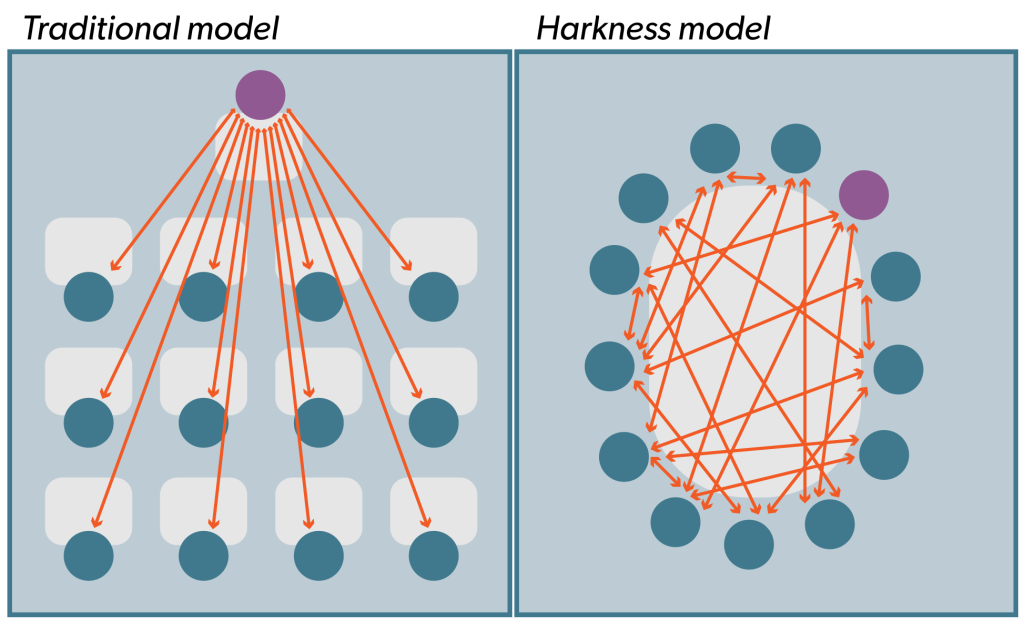
This often means that the teacher is doing most of the work. John Hattie has done research that shows most teacher speak for 60-70% of a class period, and this leaves little time for students to ask questions or work out their own ideas. 

Since the people doing the work are doing the learning, this means it is more important than ever to find ways to shift the work to our learners. Katie Novak, UDL expert and co-author of The Shift to Student Led unpacks the research on motivation, which shows that models with the teacher at the center create a self-fulfilling prophecy: students who are overly reliant on the teacher to drive instruction aren't motivated to own their learning. She then goes on to suggest three shifts that can help shift the responsibility and motivation for "transfer of information" to student discovery:

1. The Choice Board

Catlin Tucker (co-author of The Shift to Student Led), explains the benefits of choice boards:
  • Choice is a powerful motivator.
  • Learner variability means that not all students enjoy the same task.  
  • Students have more control over the pace at which they navigate the tasks.
  • Teachers are freed from orchestrating a lesson and able to conference with learners about their progress, provide feedback on work in progress, or conduct side-by-side assessments.
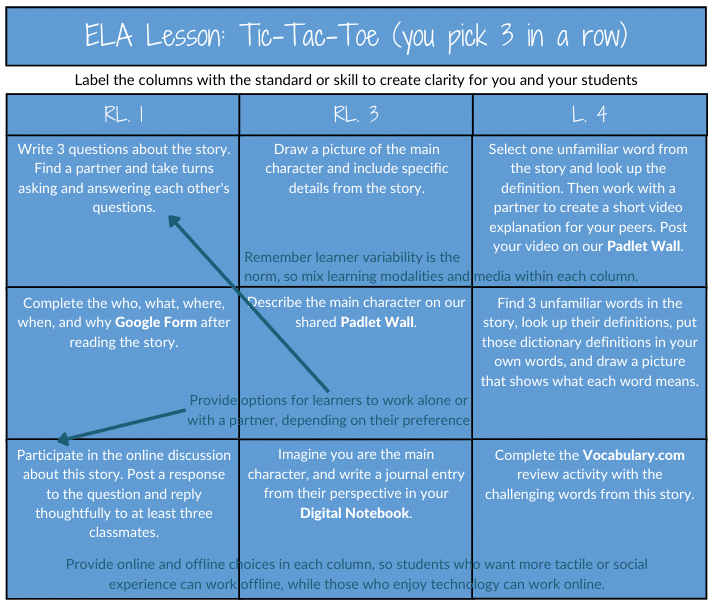
While these are often associated with projects, choice boards can be used daily with very little prep from the teacher, such as this example for planning activities based upon the unit standards.
2. Leverage Reciprocal Teaching and Jigsaw Activities

Reciprocal teaching, a cooperative learning strategy that improves comprehension, has long shown benefits to learners. The benefits include:
  • It encourages students to think about their own thought process during reading (metacognition).
  • It helps students learn to be actively involved and monitor their comprehension as they read.
  • It teaches students to ask questions during reading and helps make the text more comprehensible.
  • It can be adapted for different content areas.

Likewise, the jigsaw method (and it's adaptations) has shown benefits for learning and motivation, making students depend upon each other for new learning.


3. Make Direct Instruction Differentiated and Bite-Sized

Leveraging small group instruction can provide more time and opportunity for learners to lead, while still allowing the teacher time to give students what they need. Catlin Tucker also recently wrote about how to leverage AI to support station rotations and other student-centered lesson designs, which allow for in-person small groups OR video-based instruction.


Just the Beginning

In closing, there are so many ways to shift to more student-centered learning opportunities. As Crystal Frommert says in her Edutopia article:
Consider ways that you can promote discussion and collaborative learning among your students. How can you, as the teacher, step back from the “sage on the stage” lecture model? It doesn’t have to be an overnight shift; even small changes will promote student voice, equity, and deeper thinking.

 

Friday, June 2, 2023

Try Something New as the Year Draws to a Close

The end of the school year is a great time to try something new. Although the best time for "something big" this is in the last month, if you have a lesson idea or tool you are thinking about for next year, why not try it now, when you and your students have less to lose?

One example that many teachers in GPS are trying is the Building Thinking Classrooms approach. While there is plenty written about it that teachers can explore, the crux of the approach is that instead of starting a lesson with direct instruction, the teacher uses more of an inductive learning method by giving students novel "thinking tasks" to work on, ideally in groups.

The creator of this method, Peter Liljedahl, shares the realization that if we want students to push through difficult problems and find their own solutions, we have to create situations that provide opportunities and support for this.

“By and large students spend most of their class time not thinking, at least not in ways we know they need to think in order to be successful in mathematics.” Liljedahl explains. “If they’re not thinking, they’re not learning.”

Also key are whiteboards, or nonpermanent vertical surfaces that allow students the freedom to fail. Liljedahl shares that research supports this, and it makes sense, because students will "try anything and everything because they feel like they can just erase it if it's wrong".

The same can be said for teaching, especially at the end of the year. Try something new--and if it isn't perfect, that's okay.


Thursday, March 23, 2023

Managing March Behaviors with "Better" Questions

We've heard from teachers that students are antsy and testing limits, so it must be March, the longest teaching month.

A recent podcast and article by Dr. Angela Watson shared some wisdom that just might help with this. She asks us to consider how asking better questions of our students can garner better results.

In "The Power of Asking Better Questions," she shares that just by asking students who are off-task, "What should you be doing right now?" she enters into a productive discussion with students instead of a power struggle. Instead of asking, "What are you doing?" which is self-evident and likely annoying in some way, the teacher can ask a question that they might actually want the answer to. 

Seriously, how often has a student, when asked "Why are you pushing him?" delivered a satisfactory answer?

By training yourself to calmly prompt the student with a version of "What should you be doing right now?", you encourage the student to draw upon their executive skills: they have a moment to consider their choices, and often, a reminder to make a better one without shame or embarrassment. If the student replies with an answer that shows they know the directions, you could follow up with, "How can I help you get started?" or "Is there anything you are stuck on?" If, on the other hand, the student says, "I don't know," or names something outside the scope of your directions, then this provides you the opportunity to clarify or:

"bridge the gap between what [you] need the student to do and what the student feels they need to do. It gives some insight into what's distracting the student or causing them to make choices that aren't aligned with [your] expectations."

The examples of questions and their alternatives are all too relatable:

  • "Why is your coat on the floor?" becomes, "Where should your coat be?"
  • "Why aren't you on the right page of the textbook?" becomes "What page should you be on?"
  • "Why is your cell phone out?" becomes "Where should your cell phone be right now?" 

Your sincerity and your acknowledgment of their control over the situation will yield a much more satisfactory response than the alternative. Really, you are shifting your mindset and giving students agency by reframing the question. 

So when you are feeling frustrated with student behavior, take a deep, calming breath, and sincerely ask the student a question that provides an opportunity to think about their choices and the expectations. 

What should you be doing right now?

It might take practice, or it might take a sticky note on your ID, but if you get in the habit of asking the better question, you will find you'll get a better response.


Friday, February 3, 2023

Supporting Student Digestion (of Content)


In Catlin Tucker's recent episode of her SEL series of the podcast, The Balance, she talks about how important Self-Management is to student development, and how vital it is that we provide students with opportunities to make choices.

One research-based and easy way to do this is to provide students opportunities to monitor their own progress through checklists. Chunking big assignments into smaller pieces is often a recommendation on individualized student plans, and this makes sense: just as we wouldn't do well shoving a whole candy bar in our mouths at once, our students won't digest the task well if we ask them to conceptualize it all at once.

Additionally, education specialist Dr. Kathleen Dudden Rowlands believes checklists are more than just a way for students to stay organized and on-task: 

"Metacognitive research consistently suggests that students who know how to learn, know which strategies are most effective when faced with a problem or a task, and have accurate methods of assessing their progress, are better learners than those who don't."

So what to do?

Option 1: Provide Assignment Checklists

If you already know the steps to take for students to successfully tackle a task, why not give them a checklist? Many teachers do this for longer assignments anyway, but this can also be valuable for daily assignments. This can even be done "on the fly" for individuals in need.

Option 2: Support Students in Creating their own Checklists

Not only is breaking tasks down an important life skill, but it helps students grasp the scope (and best sequence) of the task at hand. You can scaffold this by providing a partial checklist, with students brainstorming minor tasks under a major heading, or even by creating the checklist together as a whole class or in groups. 

If you want a lesson plan idea for supporting students in breaking down directions, check this out. If you want to support students by using technology, be sure to include some time to model the tool!

Technology tools to try:

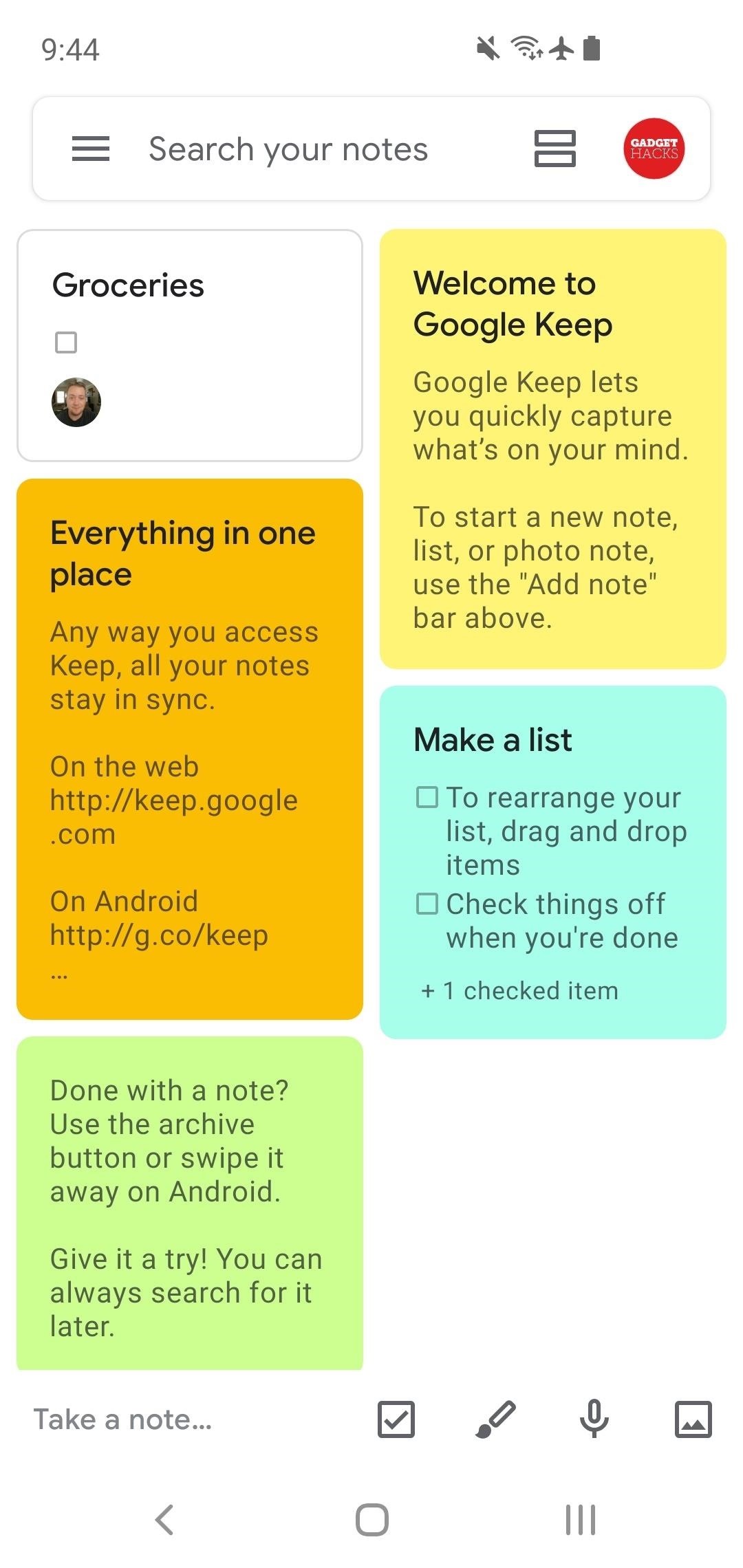
Are kids mobile? Kids can use Google Keep, which is great for use on computers and mobile devices, quickly saving content, and collaboration. (Learn more about using Google Keep with students at ShakeUpLearning.)

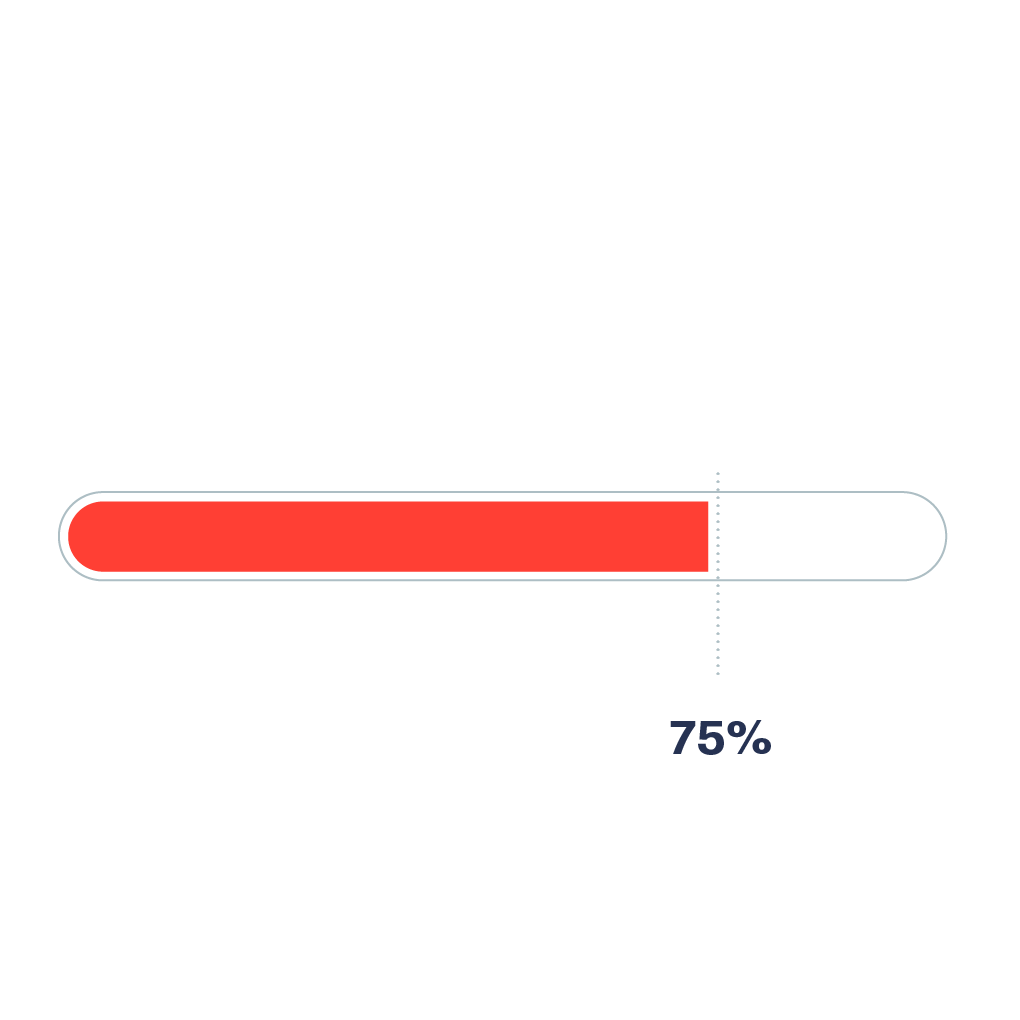
Is the task big? Students might also use Google Sheets for a more involved project. Each part of the task can have its own tab and set of checklists. TLI also has some templates that you can provide students that cross items off the list when the box is checked AND show progress in a progress bar.

Want to keep it really simple? Google docs has also just made it easier to create and use checklists, which allows for students to check and cross out items (or uncheck, if they realize it isn't done). Check out the 2 minute tutorial below that shows a few ways to make checklists!


A note about behavior: Do you have students who might benefit from an academic behaviors checklist? Enlist them in creating their own self-management goals for the day with this tool from Intervention Central.

Tuesday, December 13, 2022

Timers, Trauma-Informed Teaching, and Tiny Steps

December is "the silly season," when kids get silly for two reasons: 1) excitement for the holiday break and 2) dread of the holiday break.

Our students who have experienced or continue to experience trauma often have a different set of feelings about the holidays. The break is often unpredictable, lacking the routines, resources, and other safety found in school. Students experience more stress and in anticipation of the break, they are more likely to show the 4 Fs of stress response: Fight, Flight, Freeze, or Fawn--the last term implying the student clings tightly to the teacher and is overly dependent upon that praise. 

On a recent Melissa and Lori Love Literacy podcast, Dr. Melissa Sadin spoke in praise of timers as a strategy to help students who are being extra dependent or needy. In the example, the hypothetical student, Doug, can't/won't start his assignment because he perceives that he NEEDS the teacher by his side. The teacher then deploys a timer, starting small (i.e. 2 minutes) and asks Doug to take a small step, like writing his name on the paper and reading the directions, promising to return when the 2 minutes is up to check in. When the 2 minutes is up, the teacher returns and praises the progress. This timely behavior-specific praise (another proven strategy) gives the student the reassurance they need in a small dosage, while allowing the teacher to work with others. Then the teacher asks Doug to take another step, and sets the timer for 2 more minutes. This chunked process builds trust, as it reassures the student that the teacher will come back. This helps develop student executive skills, and eventually, will allow more time to be planned between check-ins.

This "predictable positive attention" strategy (Minahan, 2014) to create safety and discourage students from seeking attention through less desirable behaviors is reinforced in the research, as shared in the 2019 ASCD article on Trauma-Informed Teaching Strategies [Warning, clicking this link will cost you one of your free articles for the month! You can ask TLI for a PDF if you want to save up]:

During independent work time, if a teacher says to a student "Great work! I'll be back to check on you," the student has no way of predicting how long they need to wait—and from past experience they know that the teacher may forget to return altogether. Using predictable positive attention, however, the teacher can say, "I am going to check on you in 10 minutes," put a timer on the student's desk, and add, "Come tap me on the shoulder when the timer goes off." If the teacher has many students in the class that could benefit from this, she could transfer the strategy to small groups: "I will check on this desk group at X time."

Research shows that using timers, agendas, and other predictable structures helps all students. Not knowing what is coming next can put anyone on high alert, so providing visuals (as with slides or ClassroomScreen displays that allow for multiple timers) and previewing any changes to the normal routine can help.

As you navigate the middle of the year, think about how you might use timers to help structure your class and support individual students. Sharing in the comments and with your colleagues is a great holiday gift!

For more background on Trauma-Informed Practices, check out this Edutopia video:


Friday, September 16, 2022

Templates for Teaching

On a recent Truth for Teachers podcast, Marguerite Redelfs shared how she uses templates to save time AND support deeper student learning. Perhaps this is a no-brainer for some of us, but it can be worth remembering that there are a lot of ready-to-use structures out there to make teaching not just easier to prepare for, but also better for deep student learning.

Brain research supports the use of using and reusing "standardized" approaches to tasks or topics, as the familiarity with the process increases students abilities to focus on the new learning. For example, if we introduce a new review game to students, they spend as much if not more of their mental energy on learning the game as they do accessing the content. Thus, playing Blooket to review at the end of each week or unit allows students to focus on the learning and not the rules of the game.

Likewise, using Google Slides or Google Jamboard templates for Visible Thinking Routines that you can use over and over is not only a huge time-saver for the teacher, but helps students focus more on the product than the process.

Using templates for hyperdocs or other lesson organization structures is just smart. The time YOU save on creating something from scratch can then be spent on other activities that support student learning.


Tuesday, May 10, 2022

PBJ is PBL?

My daughter is obsessive and picky about her peanut butter and jelly sandwiches. As I was putting just the right amount of peanut butter on her lunch, listening to a podcast, and thinking about project-based learning (PBL), it occurred to me that with this sandwich, I might just have a project on my hands.

You see, many teachers of writing have done some version of the peanut butter & jelly sandwich writing activity. (I used to do a version called "How to Eat an Oreo.") The gist is to model how "bad instructions" can lead to confusion (i.e. smearing jelly on a nose, instead of on bread), while clear and specific instructions lead to perfection.

While this is certainly a fun activity, most educators would say it doesn't rise to the level of project-based learning (PBL). We often hear that PBL has to have certain steps or rules, like an authentic audience and outside experts, and making a PBJ just doesn't cut it.

But who gets to say that isn't PBL?

PBL Works shares that:

Project Based Learning (PBL) is a teaching method in which students learn by actively engaging in real-world and personally meaningful projects.

About 15 minutes into a recent podcast, PBL expert Trevor Muir shares that his own first grade son's experience crafting his dream house as part of class showed him that PBL is flexible, as "real-world authenticity" can vary a lot based on the students in the classroom. 

For example, if your child is very, very picky about how her PBJ is made--lots of jelly, cut into squares, arranged in a circle on the plate, etc.--then that child will have a greater sense of ownership than a student who is allergic to peanut butter or who doesn't eat bread. Likewise, students interested in food science might want to investigate what it is about the PBJ that makes it such a popular combination of flavors, or experiment to see if other PBJ applications are as popular.

The key is helping to make the learning address or solve a problem or questions that is meaningful and relevant to YOUR students. Often times we have elements of this in our classrooms already, and framing our planned activities with a question or giving students opportunities to own a topic can make the difference. The GHS Biology team made a similar shift two years ago, taking a project they would normally do at the end of the unit and making it the driving purpose of a unit: as students explored their species, the lessons the teachers taught about evolution were made all the more relevant.

There is so much research behind the power of PBL that it is worth the try. Feeling like you have to be "perfect" before trying it or that students can't handle it ought not to stand in the way. Students can learn just as much, if not more, from a failed experiment as an epic project, and as a teacher, you get to model the same humility and growth mindset that you want to foster.

Think that your unit would be more interesting if centered around addressing a  real-world problem or question? Check out these resources for more ideas on how to start using PBL to make your classroom more responsive to student voice and choice.

Wednesday, May 4, 2022

Fast Food Feedback: Make it Worth It!


Fast food is great because it is (usually) fast: as a consumer, you don't need to cook, wash dishes, or sometimes even get out of your car. However, if you just scarf down the food without tasting it, then you've wasted the experience.

Fast formative assessment is a little like that: if we don't take the time to "savor" that feedback, then  the effort of collecting the data was not worth it.

Most of our students are used to these faster computer-based assessments, whether in the Illustrative Math platform, on a Kahoot, or a teacher-made Google form. The benefit of having computer-based testing should be the ease of feedback: in mere moments, something that would have taken at least a half hour to mark has been scored and can be accessible to students for feedback, at least in terms of knowing what they got right and wrong.

So, how do we make students do more with that feedback than just look at the score?

Solution 1: Teacher-Made Groups
Look at the data and make some strategic decisions: are there questions that most students got wrong that warrant a whole class reteaching? Are there students in the class who got a commonly missed question right and could act as "experts" to help during a station rotation review activity? Are there groups of students who would benefit from small group re-teaching on a topic?

Solution 2: Student-Led Groups
Shift the responsibility to the students: Might you build in time for students to identify the top questions to review as a class? Might they work together to write explanations for the top (2, 3, 5?) questions they got wrong, but upon reviewing with peers, etc., they now know how to answer correctly? Might they have to share how they would do better on a similar question in the future, or write their own version of the question to show they understand?

What other solutions do you have for making students more responsible for using fast feedback?

Saturday, April 9, 2022

Review at the Loo


In the past few years, many people have been promoting "Potty PD," or quick items for professional learning that can be shared in places where teachers have to wait (i.e. outside the bathroom or next to the copy machine). 

A teacher at Thursday's LEARN book club for The Six Shifts (about the practicalities of implementing instruction based in the science of reading) shared a similar idea, but for students.

Essentially, she shared that teachers use the time waiting outside the bathroom for classmates to have their turn as a time to play review games for phonics, math facts, etc. She shared that this improved student behavior and made this time academically enriching.

For more about resources from The Six Shifts and related to the Science of Reading, check out TLI's Curriculum Development Website.

To join the LEARN book club (reading the book is not required!), contact TLI.

Wednesday, March 9, 2022

Put a Hex on Them!

A recent GMS lesson reminded us of how powerful, flexible, and relatively low-prep hexagonal thinking is as a tool/strategy for teaching and learning.

What is Hexagonal Thinking?

Maybe you caught the Cult of Pedagogy post on Hexagonal Thinking last year and thought, that looks cool, but I'm not in a place to cut out a bunch of paper hexagons right now. Or maybe you haven't had time to read through the variations and ideas, and now that you have seen people using this tool, you are wondering how to make it work for you. (If you want to see how hexagonal thinking works in detail, this post is so good!)

Why would I use Hexagonal Thinking?

If you haven't tried it, there are so many research-based reasons to think about using hexagonal thinking as an activity for review, formative assessment, or even summative assessment in your classroom.

  1. It uses manipulatives (physical or digital)
  2. It encourages academic conversation and collaboration
  3. It elicits higher order thinking
  4. It calls for identifying similarities and differences
  5. It is highly visual and encourages students to "build" a graphic organizer
  6. It supports long-term learning

Examples and Templates

The Cult of Pedagogy post links to many resources for physical and digital templates and examples. There are tutorials for creating digital versions of hexagonal thinking, but if you really want to save time, try starting with this Google Slides template/history example. If you are looking for more in your content area or grade level, you might check out some more examples:

There are so many ways to use and adapt this activity. Let us know how hexagonal thinking goes with your students!